Beyond Checklists: Building a Long-Term Avian Data Repository for the Eastern Ghats
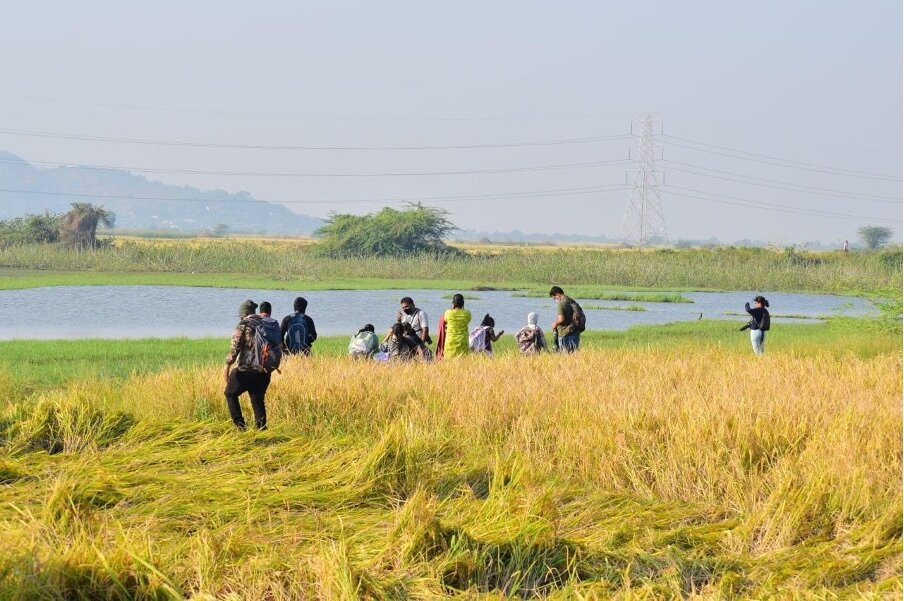
Almost a century ago, the Vernay Survey of the Eastern Ghats (1929–1931) provided one of the earliest systematic glimpses into the avian life of the Eastern Ghats in Andhra Pradesh. After that landmark effort, there were long periods without coordinated, large-scale avian studies in the Andhra Pradesh segment of the Ghats. The result is that for many species we still lack robust baselines on distribution limits, seasonal movements, breeding chronology, and population trends—information that is essential for guiding habitat protection, conservation planning, and climate adaptation.
Since 2010, however, a quiet transformation has begun. Independent birders, nature clubs, and citizens began to come together. Digital tools like eBird and iNaturalist turned passionate birders and nature lovers into citizen scientists. Groups such as the Vizag Birdwatchers Society, Vijayawada Nature Club, Tirupati Nature Society, IISER Birding Club, Anantapur Birding Club, Hyderabad Birding Pals, and Deccan Birders from Telangana, as well as committed individual birders from Vizianagaram, Rajahmundry, Prakasam, Kurnool, and Kadapa districts, have collaborated on exploratory surveys, bird walks, and wetland counts. Over 28 species of birds were recorded in Andhra Pradesh between 2017 and 2025 that had never been recorded before, i.e., new records for the state. There is a trend of continuous participation in bird surveys - both organised by focus groups and those organised by the forest department. By contributing complete checklists to eBird, these groups and individuals started building a living, publicly accessible dataset—one that already improves our understanding of seasonal occurrence (e.g., monsoon breeders vs. winter visitors), elevational use of hill slopes, and the importance of reservoirs, tanks, and coastal flats as migratory stopovers.
In the future, we need something beyond ticking off species list - continuous and seasonal monitoring, species-specific targeted surveys, etc. By repeating counts over seasons and years, we can identify rises, declines, and shifts in timing that one-off visits may miss. Long-term regular data from local birders and communities builds community pride and keeps conservation grounded in facts.
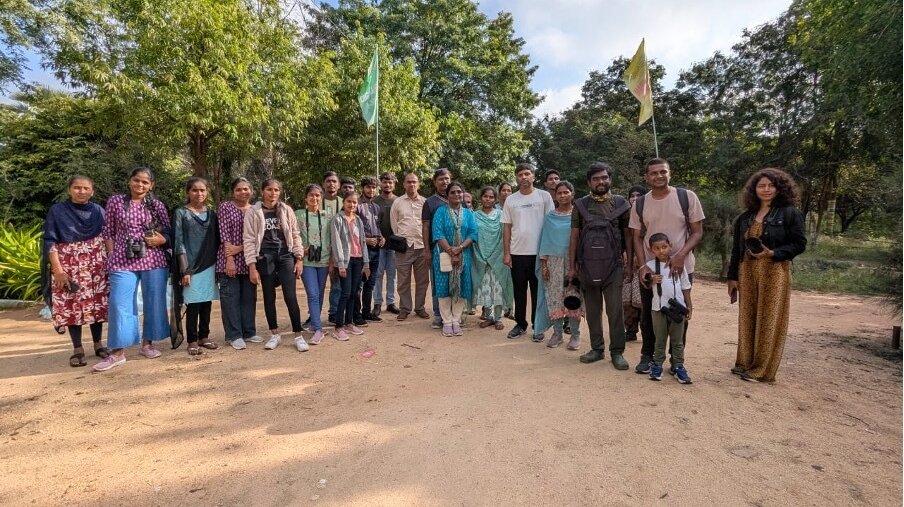
Members of the newly formed Anantapur Birding Club during a bird walk
One must spread the joy of birding, and the importance of systematic data collection must be shared with wider communities. Choose priority sites around us — contribute to fixed transect surveys in forests, reservoirs, and coastal flats that birders and birding groups can regularly visit. Keep data open on eBird and share easy summaries with the Forest Department, local stakeholders, including panchayats, and schools. Involve local youth, guides, and clubs to support community-led nature interpretation through birding.