Chiroptological studies in the Eastern Ghats
Bats are the second most specious among mammals after rodents. They perform crucial ecosystem services such as seed dispersal, pollination and pest control.
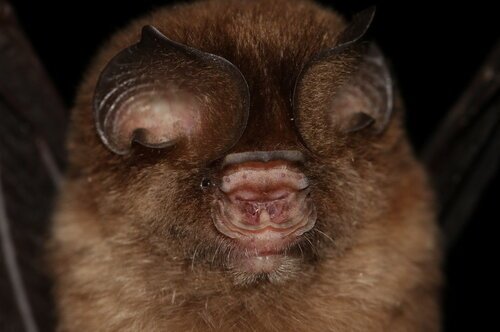
India is home to around 135 species of bats. Over the course of years, chiroptological studies in India have seen progress with respect to taxonomy, distribution, ecology and behaviour. But there is considerable bias in the coverage of such studies in the country. A majority of the studies are from the Western Ghats, and a few are from the Himalayan regions. In comparison, very few studies exist from the Eastern Ghats that span across five states from Tamil Nadu to Southern Odisha. While Debata et al. (2019) and Debata & Palita (2019) provide an overview of the distribution and the determinants of distribution of certain bat species in the Eastern Ghats, the ecology of various species throughout the range from Andhra Pradesh, Telangana, Karnataka, and Tamil Nadu is majorly lacking. For example, the Cantor’s leaf-nosed Bat Hipposideros galeritus is known from the Eastern Ghats (Srinivasulu 2004; Debata & Palita 2017). But information regarding their habitat use, foraging activity, and social structure from these regions is unknown. The Eastern Ghats are home to a wide variety of landscapes, which are ideal habitats and roosting sites for numerous bat species.
Therefore, we call for further chiroptological studies in the Eastern Ghats. Studying insectivorous bats was kind of challenging till now due to the unavailability of affordable technologies. But with the rise in affordable acoustic devices such as the AudioMoths, monitoring the activity of insectivorous bats has become a possibility and can be implemented in multiple regions through efficient training.
We also acknowledge that we might have missed or be unaware of a few chiroptological studies in the Eastern Ghats. To arrive at a decision regarding the distribution, population status and conservation implications, we need adequate ecological data. Unless that data is obtained for this region, we would never know if any particular species faces threats to its survival.
Photo credit: Hipposideros galeritus c Manuel Ruedi
Melito Pinto is a PhD scholar at GITAM Deemed to be University, Visakhapatnam. He is currently investigating the impacts of light pollution on insectivorous bat communities in the city of Visakhapatnam, Andhra Pradesh. He can be reached at [email protected].
Further Reading #
- Debata, S., & Palita, S. K. (2017). Distribution, population status, and threats of nationally threatened Cantor's leaf-nosed bat Hipposideros galeritus Cantor, 1846 in eastern India. Journal of Asia-Pacific Biodiversity, 10(3), 426-430.
- Debata, S., Panda, R. M., & Palita, S. K. (2019). Chiropteran diversity and the key determinants of their distribution in Eastern Ghats, India. Biodiversity and Conservation, 28(8), 2385-2404.
- Debata, S., & Palita, S. K. (2019, December). Bat fauna (Mammalia: Chiroptera) of southern Odisha along the Eastern Ghats, India. In Proceedings of the Zoological Society (Vol. 72, No. 4, pp. 420-429). New Delhi: Springer India.